




In the rugged backcountry of Pajeú, in Brazil’s semi-arid Northeast, stories of resistance are etched into the dry earth and collective memory. Historically plagued by highly unequal land distribution and patriarchal power structures, in the early 20th century this region was home to the cangaço movement – groups of bandits who challenged the entrenched power of large landowners, as a form of resistance in an unforgiving landscape shaped by extreme inequality and authoritarianism.
Women, too, were part of this history – some as companions and fighters within the cangaço, others as silent pillars of resilience in their communities, cultivating food in poor soils and sustaining families through droughts even as they were excluded from land ownership and decision-making spaces.
Within this context there were also environmental issues, with the degradation of the Pajeú river basin rendering the river intermittent. In an area that already suffered from irregular rains, this worsened water scarcity for both human consumption and food production.
For the rural women of Pajeú, this context is particularly challenging not only because of the gender inequality and violence that still exists, but also because local communities struggle to maintain basic productive conditions due to the concentration of wealth, which results in a lack of resources and infrastructure for coping with the semi-arid climate in a sustainable way.
“It is not about fighting drought, but about being able to work while respecting the realities of the territory.” - Sara Rufino, Technical Advisor at House of the Woman from the Northeast, Pajeú Agroecology Network.
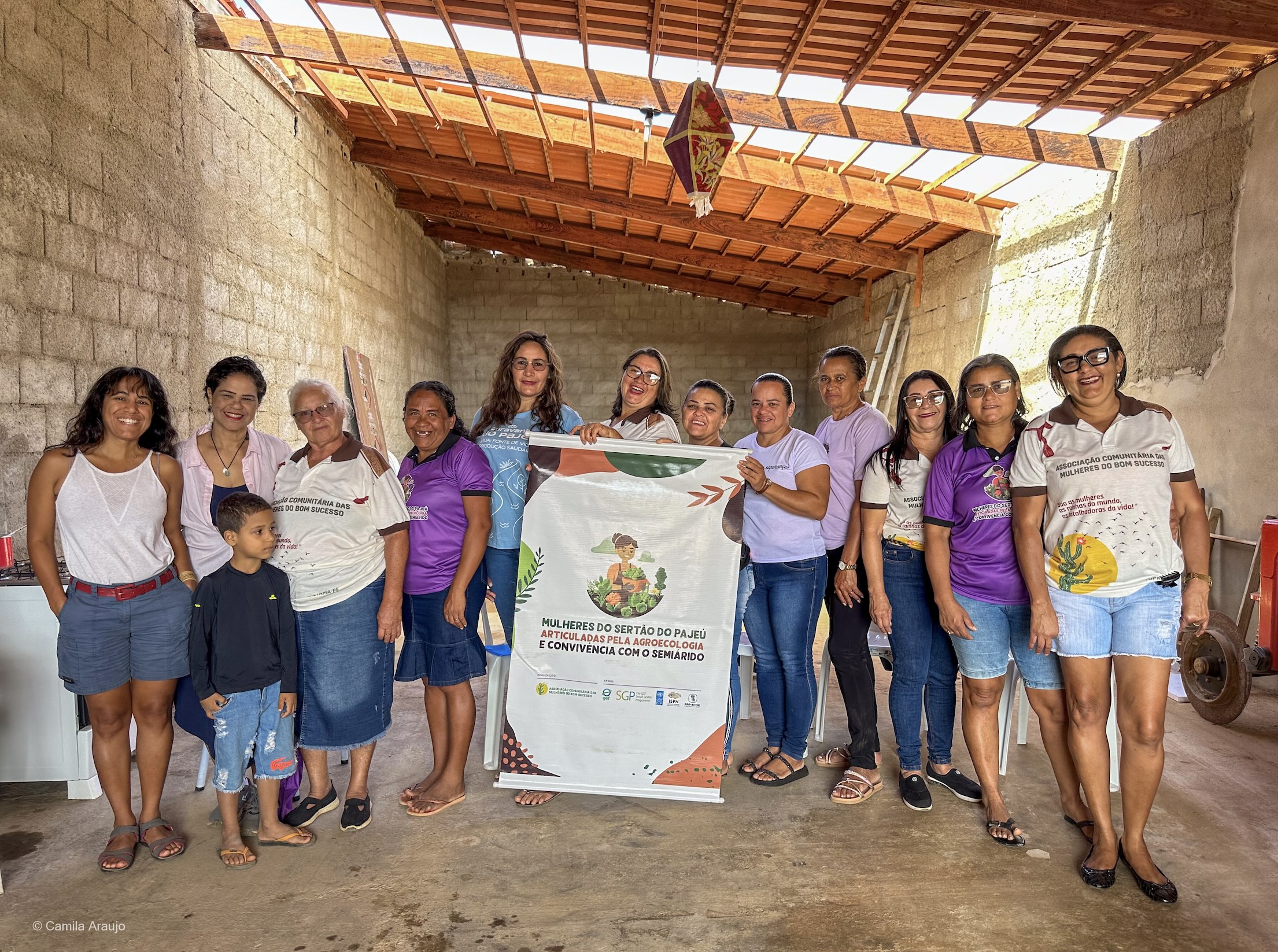
Stewards of the Backcountry
This is where female farmers from a rural community in Pajeú came in to reclaim their place as stewards of this territory. With support from the Global Environment Facility (GEF) Small Grants Programme (SGP) – implemented in Brazil by the United Nations Development Programme (UNDP) in partnership with the Institute of Society, Population and Nature (ISPN) – the Community Association of Women from Bom Sucesso launched a project to transform survival into sovereignty. The project worked to empower local women to cultivate food sustainably, generate income, and participate in political decision-making spaces while conserving the Caatinga – the only biome found entirely within Brazil, characterized by a semi-arid climate and vegetation adapted to long dry seasons.