

The Community-Based Adaptation (CBA) Project is a five-year (2008-2012) funded mainly by the Global Environmental Facility (GEF) with US$4.5 million, and implemented by UNDP through the GEF SGP with the support of UNDP Country Offices. The project has received co-financing from several donors – including AusAid and the Governments of Japan and Switzerland – and the United Nations Volunteers (UNV) programme is a key partner with GEF SGP to enhance community mobilization, ensure inclusive participation, as well as to facilitate capacity building of partner non-governmental organizations (NGOs), and community-based organizations (CBOs). This project is implemented by SGP in 9 out of 10 pilot countries: Bolivia, Guatemala, Jamaica, Kazakhstan, Morocco, Namibia, Niger, Samoa, Vietnam. In Bangladesh the SPA-CBA project is implemented by UNDP country office. The goal of the project is to strengthen the resilience of communities addressing climate change impacts, test the Vulnerability and Resource Assessment (VRA) tools and other community-engagement instruments and methods, and to generate knowledge and lessons for replication and upscaling.
The types of projects promoted include:
i) Agricultural and food security- Strengthening resilience which can range from adopting practices to protect existing livelihood systems, diversifying sources of income, to changing livelihood strategies,
ii) Water resources management- In many locations, water management cannot satisfactorily cope even with current climate variability, resulting in flood and drought damages. As a first step, typical projects should aim at improved incorporation of information about current climate variability into water-related management activities so that communities can adapt to longer-term climate change impacts,
iii) Coastal management-Projects in this category would come from the general area of: salt water intrusion management, protection of coastal defenses to storm surges, reduction of sedimentation and sediment loads, rehabilitation of coastal vegetative resources, infrastructural support, provision of household water supply, management of coastal river delta basins, ecotourism activities aimed at reducing pressures on natural resources in the hinterlands, fisheries and marine conservation, important bird areas management,
iv) Disaster management and risks reduction- Disaster Risk Reduction &Recovery projects would coalesce around, early warning and preparedness. Typical disasters that affect communities for which CBA projects should aim at includes landslides, floods, invasion of pests, drought, and insecurity and disease outbreaks and,
v) Public health and sanitation-Management of pest using biologically friendly and environmentally degradable solutions, proposing the utilization of flood waters, proper hygiene and sanitation provision for crowded dwelling places like in urban centers comprise common project types in this area
Achievements to date
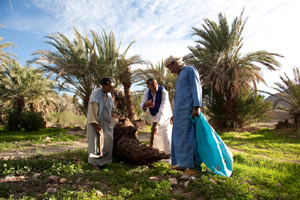
Since 2008, the projects has invested in a pool of community operators that have played a key role in mobilizing communities towards conceptualizing, planning, and implementing up to 65 CBA projects. Initial stages of the project concentrated on training of community members on VRA along with a number of tools and knowledge products being developed. These include photo stories, participatory videos, project brochures, fast facts, power points presentations, guide books and a draft manual.
The project results were presented in the Global CBA conference and shared with researchers as well as countries interested in learning about the VRA and CBA activities of UNDP. To better generate lessons, a clustered and programmatic approach is being used to aggregate benefits at global levels. The project portfolio is targeting various aspects of vulnerability, including biodiversity loss, land degradation and management, poor technological services, inadequate local policies for site specific governance and inadequate coastal-watershed management. A number of reports have been prepared which are focus on these vulnerabilities. These range from thematic reports, to policy briefs and case studies. To read more about the SPA CBA partnership of GEF SGP and to access the current knowledge products, please click here.
Cape Verde - CBA Project Guiteiro-Losna