

Three innovative community-led projects in Jamaica are making waves in marine conservation and sustainable fisheries, demonstrating how grassroots action can drive national policy and regional development goals. Funded through the Global Environment Facility Small Grants Programme (GEF SGP) implemented by the United Nations Development Programme (UNDP), the initiatives in the Salt Marsh, Whitehouse, and Rio Nuevo communities are empowering fisherfolk, restoring coral reefs, and strengthening the blue economy.
These projects are part of the broader UNDP/GEF/UNOPS PROCARIBE+ project, which brings together regional and national partners to support sustainable ocean management, strengthen marine economies, and promote collaboration across the Caribbean to protect marine resources.
“These projects show the power of community-led action in protecting Jamaica’s marine ecosystems. By equipping fishers with the tools and knowledge to fish sustainably, we’re not only safeguarding marine biodiversity but also strengthening local economies and food security. Through SGP and PROCARIBE+, we’re building ocean resilience- starting at the grassroots.” Hyacinth Douglas, National Coordinator, GEF Small Grants Programme Jamaica
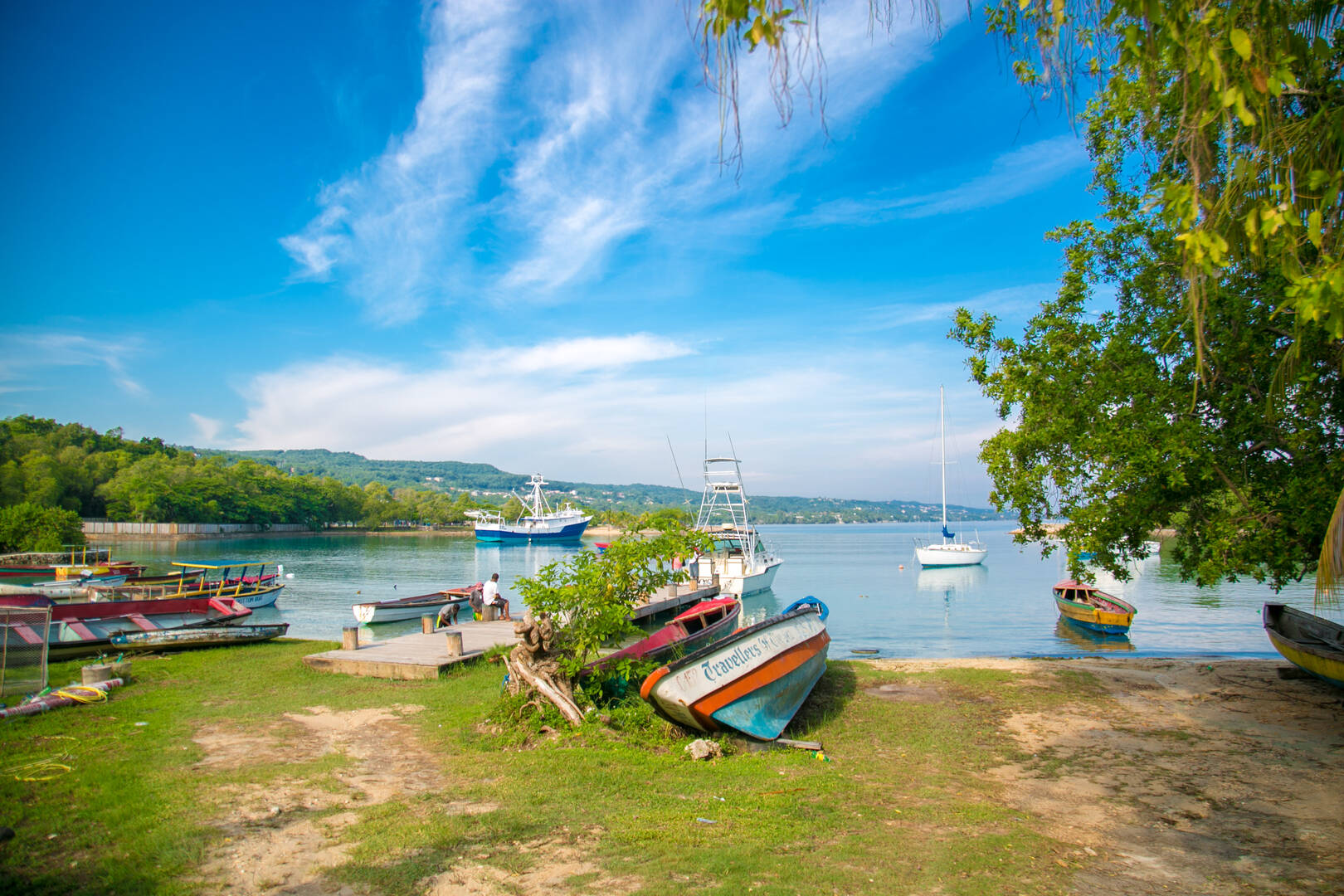
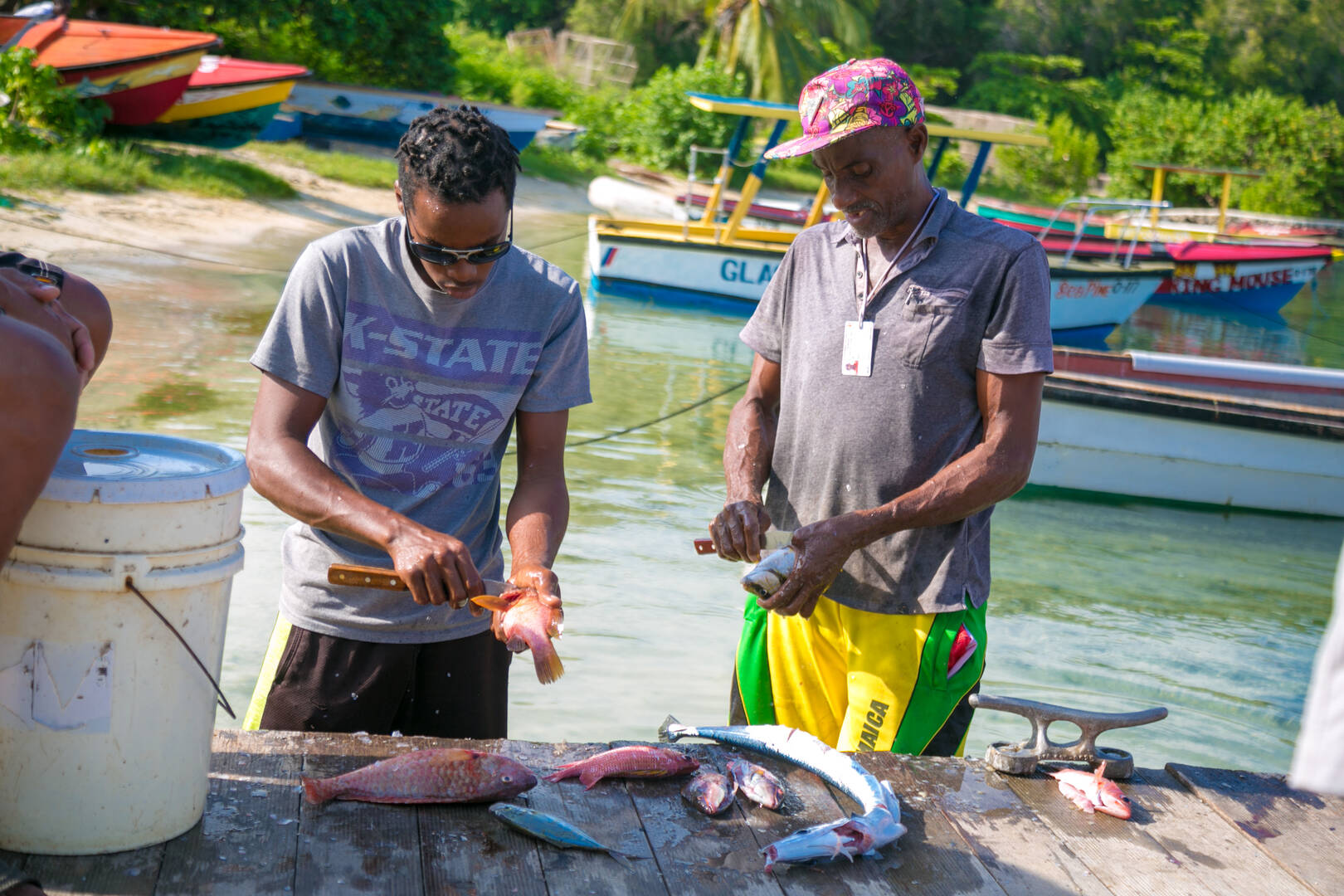 Oracabessa fishing community. The Oracabessa Marine trust is providing technical support to the SGP Procaribe+ projects. Photo: SGP Jamaica.
Building Capacity for Pelagic Fishing and Coral Restoration in Salt Marsh
The Scarlett Hall, Salt Marsh, Halfmoon Bay Fishers Association is leading a transformative project aimed at reducing pressure on nearshore coral reefs. With over 10,700 residents relying heavily on small-scale fisheries, the community faces challenges from overfishing, climate change, and coastal development.
To address these issues, the project is training 30 fishers in sustainable pelagic fishing techniques, coral gardening, and food handling, enabling them to transition from overexploited nearshore zones to offshore fishing grounds. A coral restoration programme will establish nurseries across 400 hectares of reef, complemented by beach cleanups and the installation of garbage bins to improve coastal sanitation.
Two fish processing facilities will be refurbished to enhance hygiene and food safety, while environmental awareness workshops will educate fishers on climate impacts. The initiative is promoting sustainable livelihoods, community-led marine conservation
Diversifying Fishing Efforts and Enhancing Food Security in the Whitehouse Fishing Community
In St. James, the Whitehouse Fishing Village Association is tackling similar challenges with a focus on diversification and resilience. The community, home to 500 residents and a vital fishing hub for Montego Bay, is under pressure from tourism development and declining reef health. The project will deploy Fish Aggregating Devices (FADs) to support offshore fishing and reduce strain on 950 hectares of nearshore ecosystems. A “how-to” guide on sustainable fishing practices and a fishers management programme will be developed to institutionalize best practices.
Training in pelagic fishing and food handling will be provided to 30 fishers, with certification from the Ministry of Health and Wellness. Essential equipment will be distributed, and two sanitary fish processing stands will be constructed to improve food safety for over 2,000 consumers in the wider community.
Rio Nuevo: Enhancing Ecosystem Resilience and Fisheries Governance
In the Rio Nuevo and Boscobel communities of St. Mary, the Rio Nuevo Stewart Town Fisherfolk Association is spearheading a project that blends ecosystem restoration, capacity building, and governance. The project will impact 2,000 hectares of coral reef and associated ecosystems by promoting sustainable fishing practices and deploying a FAD to support pelagic fishing. A METT (Management Effectiveness Tracking Tool) assessment will monitor improvements in marine protected area management.
Ten fishers will receive training and equipment to transition to pelagic fishing, while 40 will benefit from refurbished fish stands and storage facilities. Workshops on climate-resilient fisheries and disaster preparedness will build community resilience, and a data collection system will be established to track fish catch and inform policy.
“This grant is a historic moment for our group. In a space traditionally dominated by men, having this initiative led by women symbolizes progress, inclusivity, and a fresh perspective on leadership. This project is not only about conserving our marine ecosystems but also about empowering our community- showing that when women lead, the benefits ripple across families, fishers, and future generations. For our environment, it means healthier seas and stronger fisheries. For our people, it means resilience, unity, and progress towards sustainable livelihoods.” Jerlene Layne, Project Manager, Rio Nuevo Stewart Town Fisherfolk Association
Shared Impact and Future Potential
Together, these three complementary projects represent a powerful shift toward community-led marine conservation and sustainable fisheries management in Jamaica. By equipping fishers with the skills, tools, and infrastructure needed to adopt sustainable practices, the initiatives are reducing pressure on fragile reef ecosystems, improving food safety, and enhancing livelihoods.
Each project aligns with Jamaica’s National Fisheries Policy and contributes to the goals of the PROCARIBE+ regional project. They also demonstrate the potential for scaling up and replication, offering models that can be adapted across the country and the Caribbean.
As these communities continue to build capacity, strengthen partnerships, and share knowledge, they are not only preserving their natural resources but also shaping a more resilient and inclusive blue economy.