




Franklin Olivo was following a trail along a river that weaves deep into the jungle of Tagarkunyal – an ancestral territory of the Guna Indigenous Peoples, at the heart of Panama’s Darién province – when he saw it: chulub tummad, the harpy eagle (Harpia harpyja).
With a two-metre wingspan and claws as big as those of a grizzly bear, it is the largest and most powerful eagle in the Americas. Joined by a group of youth from his community of Púcuro, Franklin could see the awe in their eyes.
“That gave me hope.” - Franklin Olivo, 55-year-old youth leader from Púcuro.
Wild Darién
Officially recognized as Panama’s national bird, the harpy eagle holds great cultural significance for various Indigenous groups. They are a vital component of the rainforest ecosystem, often referred to as a guardian of the rainforest. Threatened by hunting and habitat loss, one of the eagle's last strongholds is the Darién region, a dense rainforest area around the Panama-Colombia border that acts as a natural bridge between Central and South America.
Wild, remote, and globally renowned as a biodiversity hotspot, Darién remains largely untouched and is home to various Indigenous Peoples, including the Guna. The isolation that keeps Darién wild also brings challenges: nearly half its population lives in poverty; drug and human trafficking are widespread, and many young people migrate to urban centres in search of better opportunities.
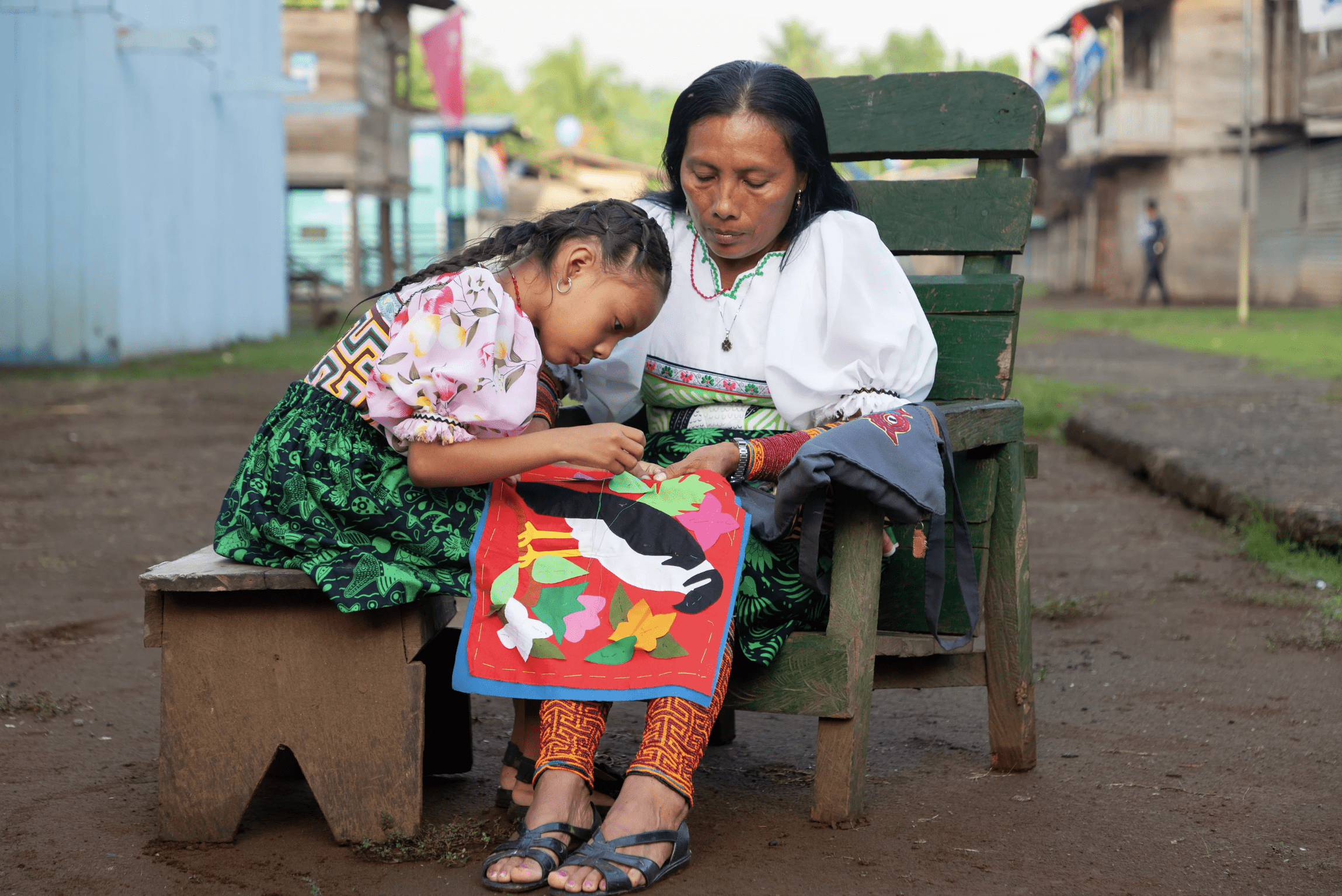
While the area’s main economic activities – agriculture, livestock farming, timber and mineral extraction – threaten the forest, the presence of the Guna and other Indigenous Peoples is a powerful counterforce. Their traditional knowledge, deep spiritual connection to nature, and community-led stewardship have proven vital for protecting this precious ecosystem. In Tagarkunyal, environmental conservation is not an isolated endeavour – it is a way of life, passed down through generations.
The Harpy Eagles
On the day he spotted the harpy eagle, Franklin was leading a monitoring trip as part of a project to integrate scientific approaches with traditional knowledge for the conservation of birds of prey in Tagarkunyal. “That was one of the most special moments for me,” he recalls. “It’s not just about seeing it once – it’s about remembering that life still thrives in our territory and we have a responsibility to protect it.”