




Lakes and rivers, swamps and marshes, wet grasslands, peatlands, oases, estuaries, deltas and tidal flats, mangroves and other coastal areas, coral reefs, underground aquifers, fishponds, rice paddies, reservoirs and salt pans. What do they all have in common?
Water.
All these environments – whether natural or human-made – are wetlands: among the most valuable, but also fastest-disappearing ecosystems on Earth. Despite covering only six percent of the planet’s land surface, wetlands provide over US$47 trillion in ecosystem services per year, which represents over 43 percent of the value of all natural biomes. They are not only biodiversity strongholds – supporting 40 percent of all known species – but also the most effective carbon sinks on Earth. Wetlands are the world’s largest filtration tanks too, with a single hectare purifying water for up to 200,000 people every year.
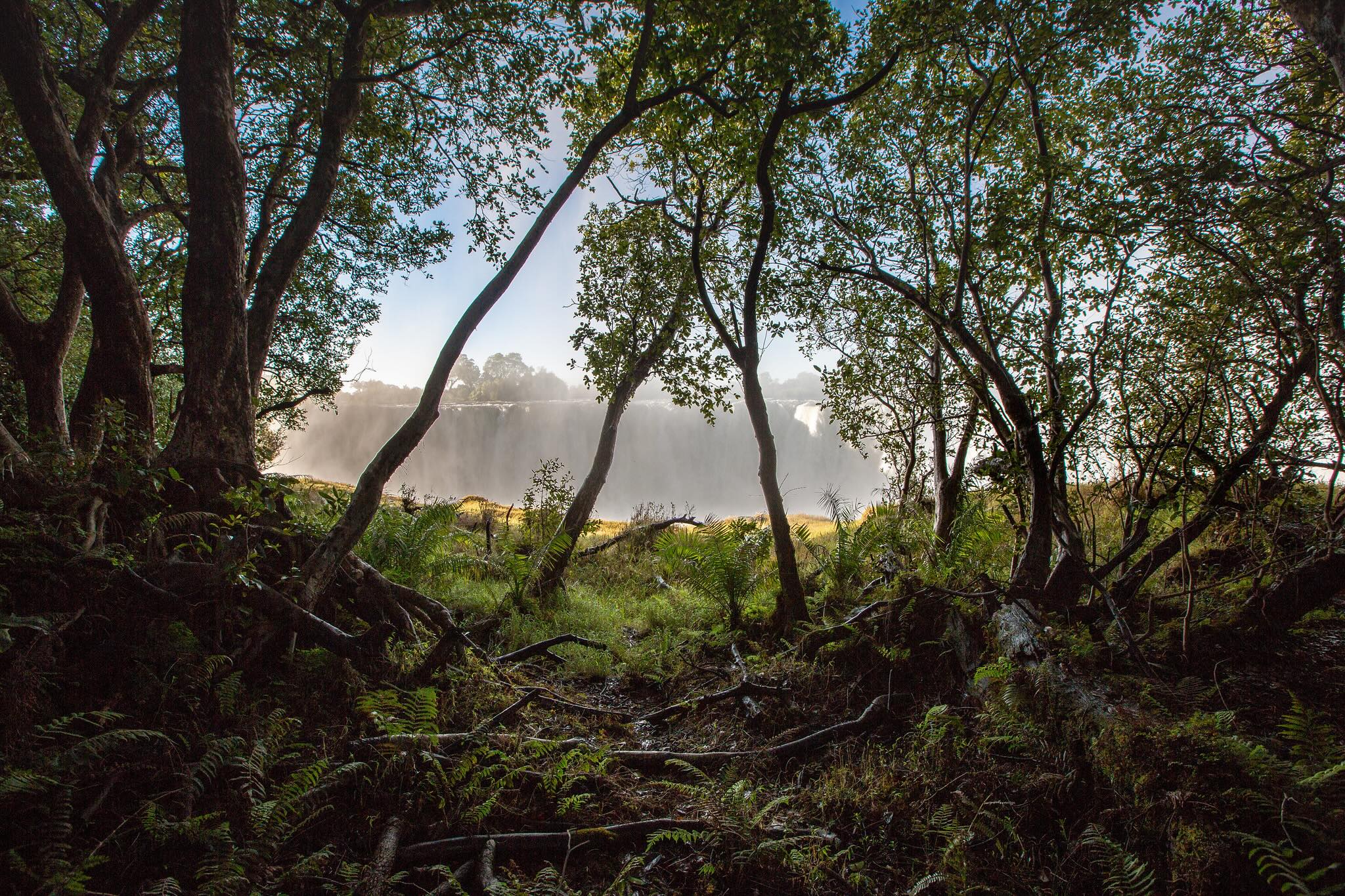 Victoria Falls National Park in Zimbabwe. Photo: Gregoire Dubois.
Too Precious To Lose
However, these and other services provided by wetlands – such as water cycle regulation, nutrient cycling and flood control – are collapsing due to pollution, drainage for development and agricultural expansion. We have already lost over 85 percent of all wetlands in the past two centuries. Since 1970, they have been disappearing three times faster than forests. With more than four billion people depending on wetlands for clean water, food, transport, and livelihoods, the social and economic stakes are higher than ever.
“Wetlands are our children’s heritage.” – Samson Kuchicha, head of Vambai village, Zimbabwe.
Protecting and restoring wetlands is essential not only to mitigate greenhouse gas emissions, improve water security, boost food production and reduce disaster risks, but also to create new jobs in conservation, ecotourism, sustainable fisheries and green infrastructure.
These direct linkages between ecosystem health, economic opportunity and human well-being make wetland restoration a triple-win, nature-based solution that advances development, climate and biodiversity goals simultaneously – helping jointly achieve the Sustainable Development Goals of the 2030 Agenda, the Paris Agreement on climate change, and the Kunming-Montreal Global Biodiversity Framework.
Zimbabwe’s Wetland Wonders
The Ramsar Convention on Wetlands is an intergovernmental treaty that brings together representatives of nearly 90 percent of United Nations member states every three years to discuss the conservation and wise use of wetlands and their resources. In July 2025, the 15th Conference of the Parties to the Ramsar Convention will happen in Zimbabwe, a country that has designated seven wetlands as Ramsar Sites of International Importance.
“Wetlands are vital ecosystems: the more we protect them, the more our environment is enriched, and our livelihoods are improved in the face of climate change”. – Tsitsi Wutawunashe, SGP National Coordinator in Zimbabwe.
Recognizing this, the Global Environment Facility (GEF) Small Grants Programme (SGP), implemented by the United Nations Development Programme (UNDP), has been supporting several locally-led projects to protect and restore Zimbabwe’s wetlands for decades.