




Nestled in Nepal’s remote highlands, the Nubri Valley is framed by towering Himalayan peaks and dotted with ancient monasteries and stone houses. Accessible only by rugged footpaths, this isolated region preserves unique biodiversity and centuries-old traditions. Its harsh climate, where winter temperatures can plunge to -20°C, has shaped resilient communities that rely on Indigenous knowledge to survive. Yet climate change and globalization have driven many working-age men away, leaving women to shoulder the double burden of household tasks and income generation.
The high Himalayas and Tibetan plateau are warming two times faster than the rest of the world, endangering the lives of the 1.8 billion people who depend on its glacier’s waters to survive.
Yongey Mingyur Rinpoche grew up in the Nubri Valley:
“When I was young, I could walk from my house to the glaciers, just half an hour and I could touch them. But after 20 years, I went back and all these glaciers were gone! Then I thought: what can I do?”
That question became the catalyst for action. In 2018, Rinpoche founded Tergar Charity Nepal (TCN), a civil society organization that blends traditional Nubri and Tibetan Indigenous knowledge with innovative, nature-based solutions to address the impacts of climate change in this region.
Mud, yak dung, hay + captured sun = climate resilience
Three years later, with the COVID-19 pandemic aggravating food shortages and scuttling tourism proceeds, TCN launched a project in the village of Samagaun. The project was launched in partnership with the Global Environment Facility (GEF) Small Grants Programme (SGP), implemented by the United Nations Development Programme (UNDP), and the Food and Agriculture Organization (FAO) Mountain Partnership.
Located 3,500 metres high in the Nubri Valley and a six-day trek to the nearest road, Samagaun lies at the foothills of Mount Manaslu, the world’s eight highest peak, and within the pristine landscape of the Manaslu Conservation Area.
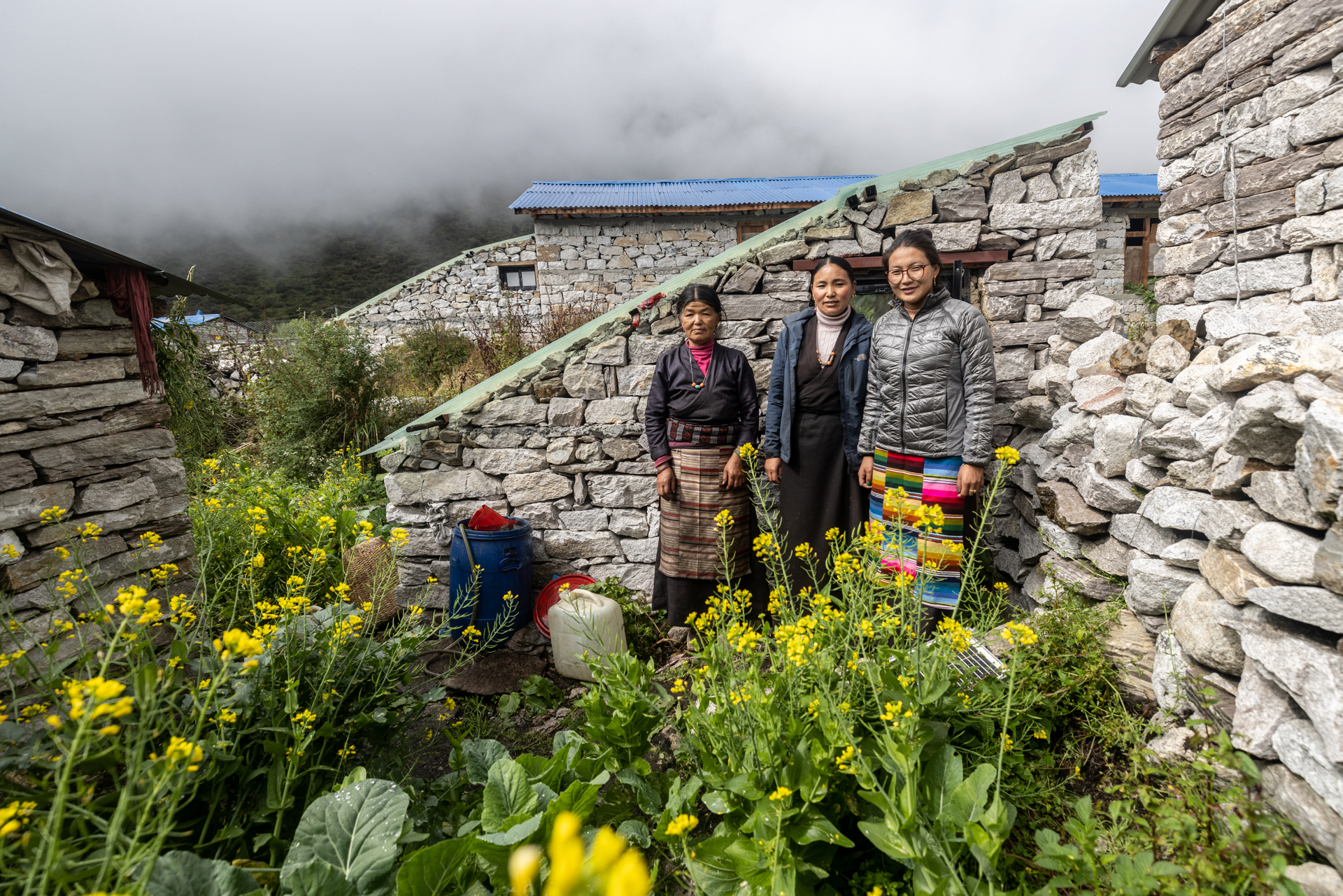
The initiative focused on building 62 bioclimatic solar greenhouses to enable the local community to grow fresh, organic produce year-round, despite extreme conditions. These structures combined modern climate-smart principles with traditional ecological knowledge, featuring earthquake-resistant stone walls and natural insulation made from mud, yak dung, and hay.
“Thanks to my greenhouse, I can grow vegetables like tomato, zucchini, beans, cucumber, and pumpkin, which I could not grow before.”
- Mendok Dolma Lama, Samagaun villager