


The Community Development and Knowledge Management for the Satoyama Initiative Programme (COMDEKS) is a flagship programme of the Satoyama Initiative, which promotes societies in harmony with nature. COMDEKS provides small-scale finance to local communities, Indigenous Peoples and civil society to enhance livelihoods and well-being, conserve biodiversity, address climate change, and support local cultures and traditional practices. In this way, COMDEKS activities not only contribute to the ecological resilience of landscapes and seascapes but also strengthen the social and economic resilience of communities.
On July 17 2025, at the United Nations High Level Political Forum, the Keidanren Nature Conservation Council (KNCC), the Ministry of the Environment of Japan (MOEJ), the Global Environment Facility Small Grants Programme (SGP) at the United Nations Development Programme (UNDP), and partners hosted a virtual side event on COMDEKS and the Satoyama Initiative. The event was moderated by Diana Salvemini, UNDP, and showcased community speakers who shared examples of locally-led initiatives in Morocco, Bhutan and Kyrgyzstan using landscape approaches to build resilience.
Access the event recording HERE.
 Caption: Bhutan Highland mountain landscape, UNDP Bhutan.
In his opening remarks, Marcos Neto, UNDP, reminded attendees that nature underpins our societies and economies and provides solutions to global crises such as climate change and biodiversity loss. He stressed that the Sustainable Development Goals (SDGs) and targets under the Global Biodiversity Framework (GBF) would be unachievable unless we restore our relationship with nature, to one that is more balanced, less exploitative and more harmonious.
Fumiaki Kobayashi, Ministry of the Environment of Japan said that the key to achieving targets under the Global Biodiversity Framework is to use a whole of society and inclusive approach. Keiji Nishizawa, from the Keidanren Nature Conservation Council reaffirmed his organisation’s commitment to supporting conservation efforts like COMDEKS, that conserve biodiversity through local action. Shinobu Yume Yamaguchi, from the United Nations University highlighted the Resilience Indicators as an adaptive tool that can be used at the community level to assess socio-ecological resilience and develop strategies for sustainable landscape management.
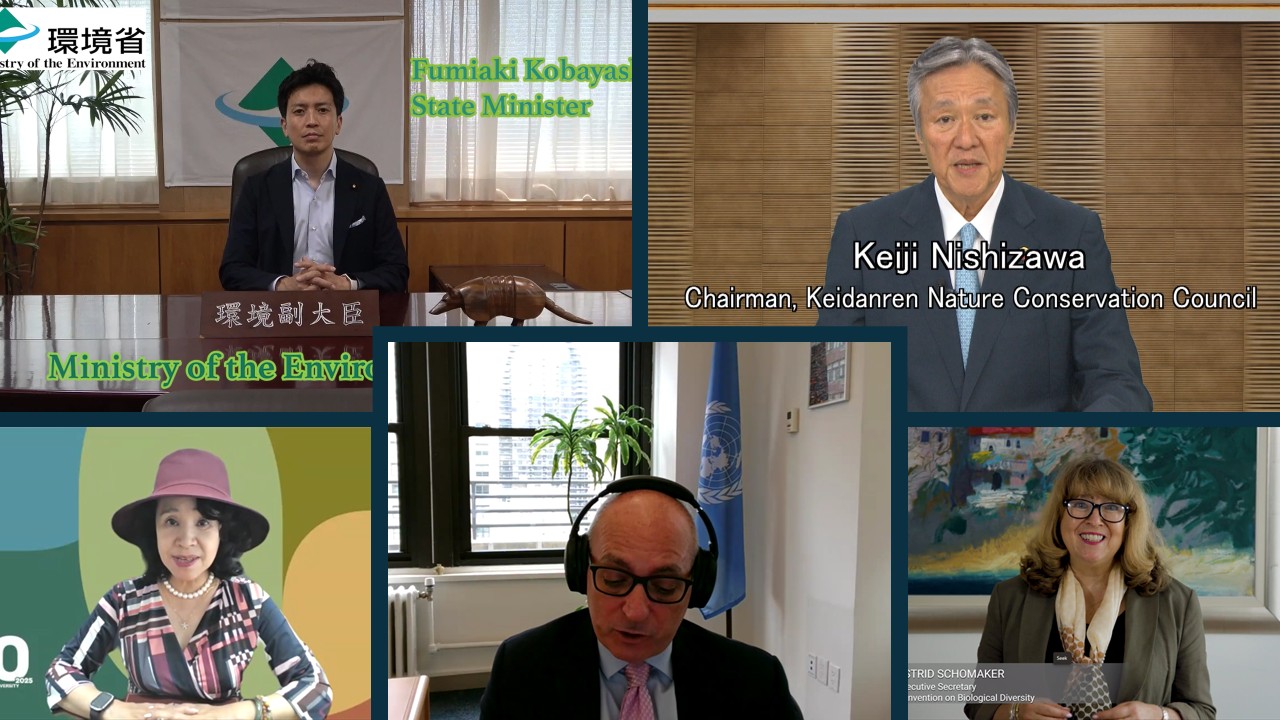 Caption: High level speakers L to R: Fumiaki Kobayashi, Keiji Nishizawa, Shinobu Yume Yamaguchi, Marcos Neto, Astrid Schomaker.
Rissa Edoo from the SGP UNDP moderated an interactive panel discussion featuring SGP COMDEKS grantee-partners from three countries participating in the fourth phase of COMDEKS.
During the panel discussion, Khadija Bourass, Executive Director at GREPOM/BirdLife Morocco spoke about the work taking place in the diverse Central High Atlas Mountains, Lake Aguelmame N'Tifounassine, a designated a Ramsar site, and the Oued Laou watershed, home to unique Moroccan fir forests and endemic flora.
She explained that the resilience indicator tool was applied during the baseline assessments in the three landscapes from a community perspective. The tool was translated into French, Arabic and the Amazigh language to facilitate understanding and adoption by local actors. Through collective discussions around each resilience indicator, participants assessed the state of their landscape according to key criteria including diversity of livelihoods, governance of natural resources, transmission of traditional knowledge, and social cohesion. Bourass stated that the resilience indicators are a powerful tool for self-reflection, explaining that it pushed the participants to reflect on traditional practices that are gradually being lost, to reevaluate the assets and opportunities that still exist in their landscapes, and identify priority actions needed to conserve nature and support local communities in the face of growing threats.
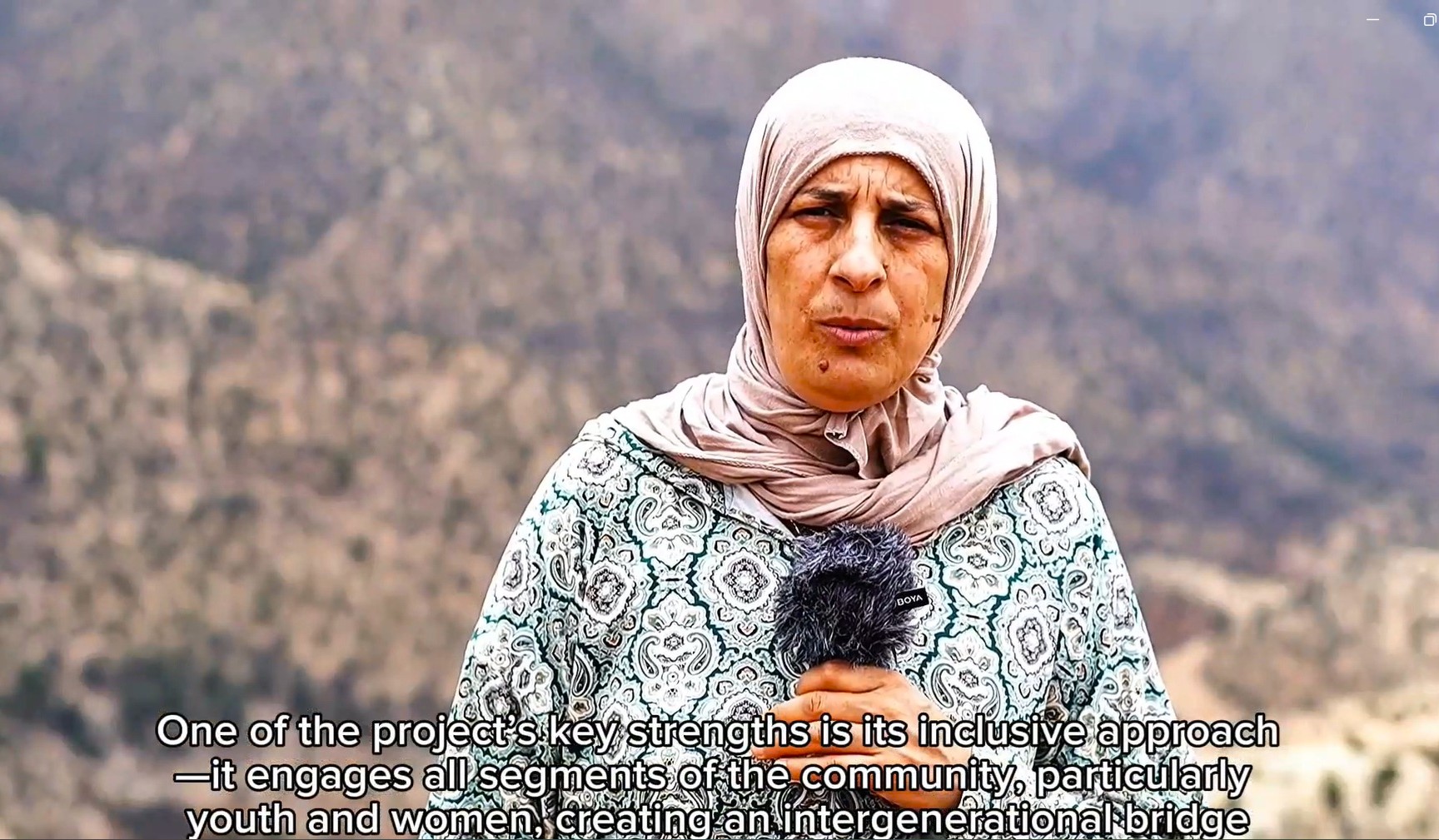 Caption: Video from COMDEKS Phase 4 project in Morocco by the Aska Association for Women and Children. SGP Morocco.
Altynai Achilova, Technical Expert from the Rural Development Fund in Kyrgyzstan explained that the Issyk-Kul Lake is an important geographical, natural, and cultural landscape/seascape not only at the national level but also regionally and internationally. She explained that COMDEKS interventions aim to develop integrated measures to promote sustainable practices in the Issyk-Kul region, both innovative and based on traditional knowledge. One planned activity includes the establishment of micro-nature reserves to increase community engagement in ecosystem and biodiversity governance, as well as support the well-being of local communities through livelihood improvement activities.
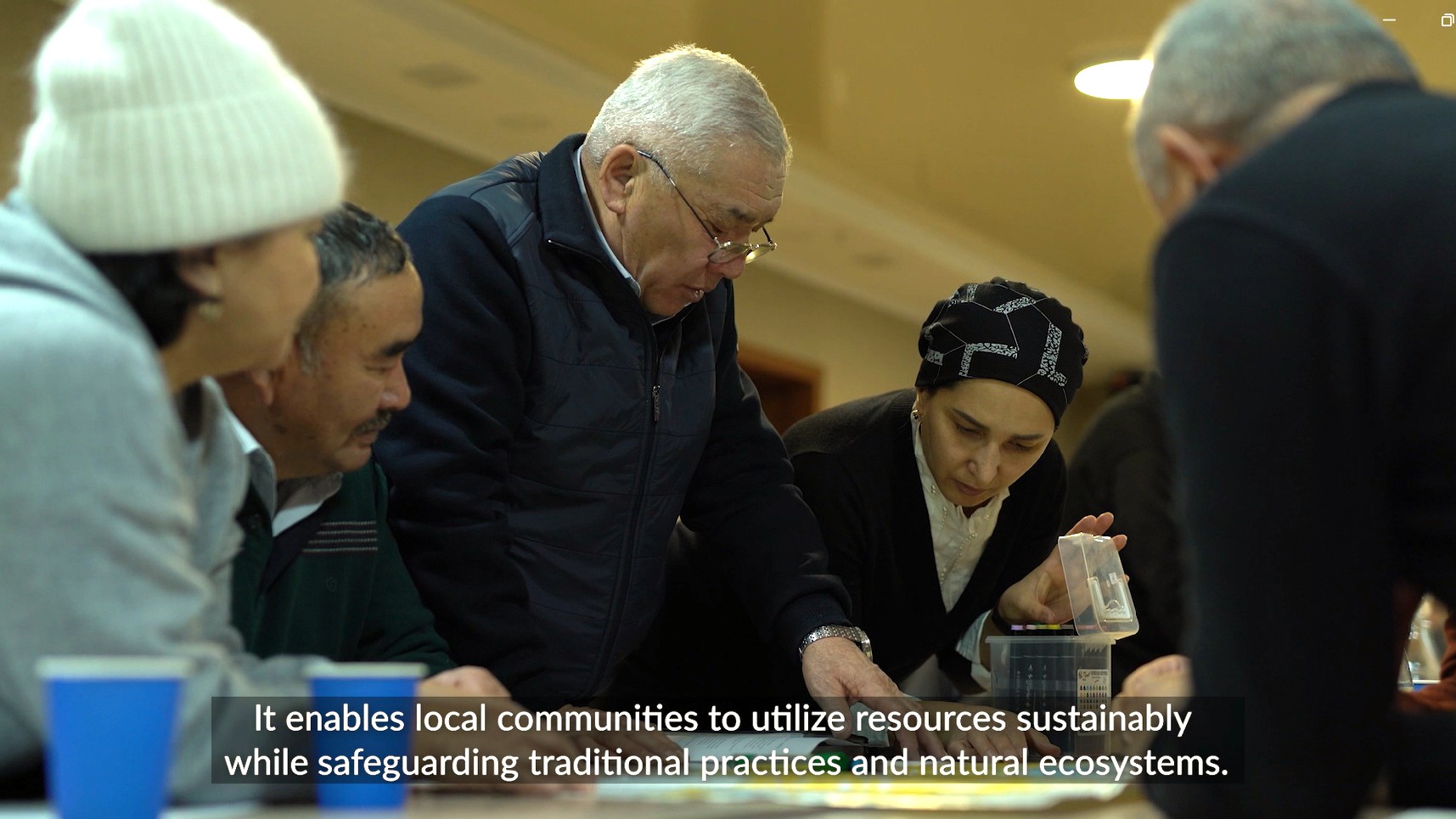 Caption: COMDEKS video highlighting the resilience indicator workshop in Kyrgyzstan led by the Rural Development Fund.
Sangay Dorji, Technical Director at the Tarayana Foundation Bhutan, talked about the challenges affecting the Himalayan Highland Mountain landscape and explained that his organization was working to restore and protect degraded pasturelands, improve rangeland management with Yak herders, and promote sustainable harvesting of Non-Timber Forest Products, including medicinal plants. He explained that these efforts will enhance habitat connectivity and resilience within the landscape and Protected Area system, and support globally significant species such as the tiger, snow leopard, and red panda.
All panellists emphasised the importance of aligning local conservation initiatives with national biodiversity policies and frameworks to ensure project sustainability and to enhance networking and partnerships within the landscapes. They also emphasized the importance of integrating traditional knowledge and culture with innovative tools and practices to enhance conservation and socio-economic resilience in the landscapes. The panel concluded with a short video on the Issyk-Kul region.
Astrid Schomaker, from the Secretariat of the Convention on Biological Diversity closed the event by praising the community speakers for taking the lead in conserving and restoring ecosystems while enhancing well-being and livelihoods. She celebrated COMDEKS’ important contribution to achieving targets under the SDGs and GBF by demonstrating how community-led action can bring about effective results for people and for planet.
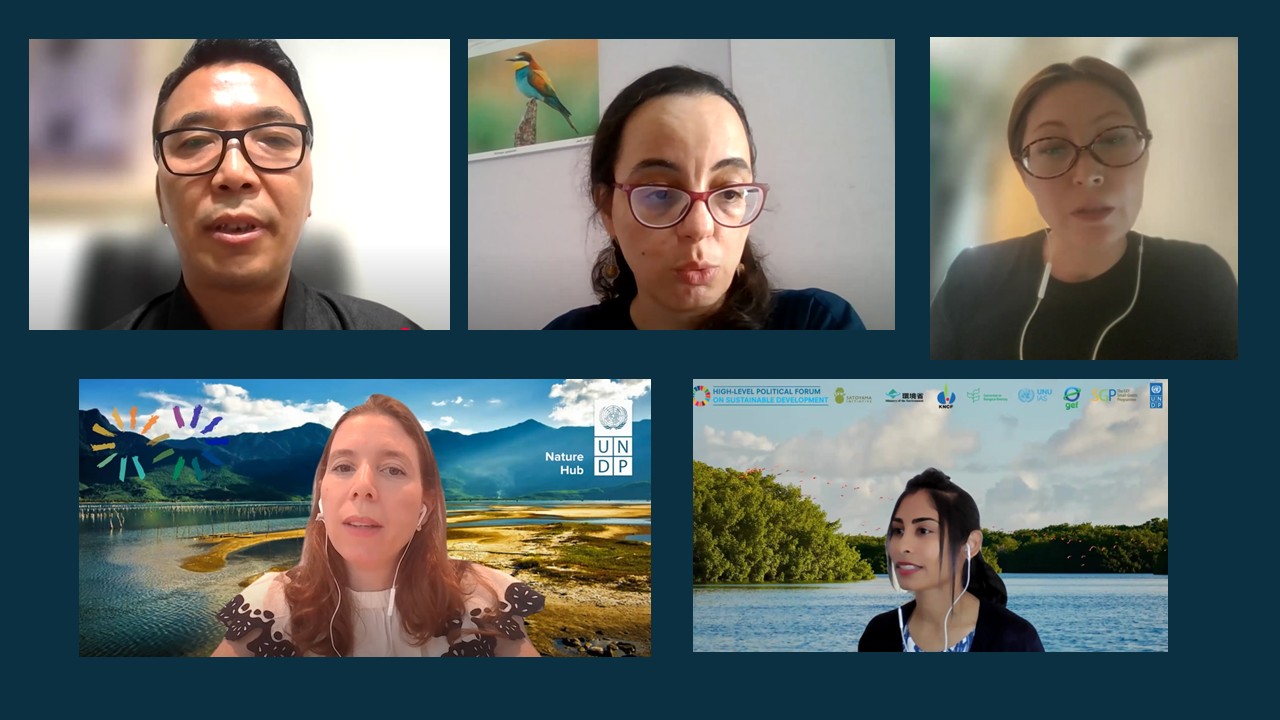 Caption: Event moderator and panel discussion participants: L to R: Sangay Dorji, Khadija Bourass, Altynai Achilova, Diana Salvemini, Rissa Edoo.