



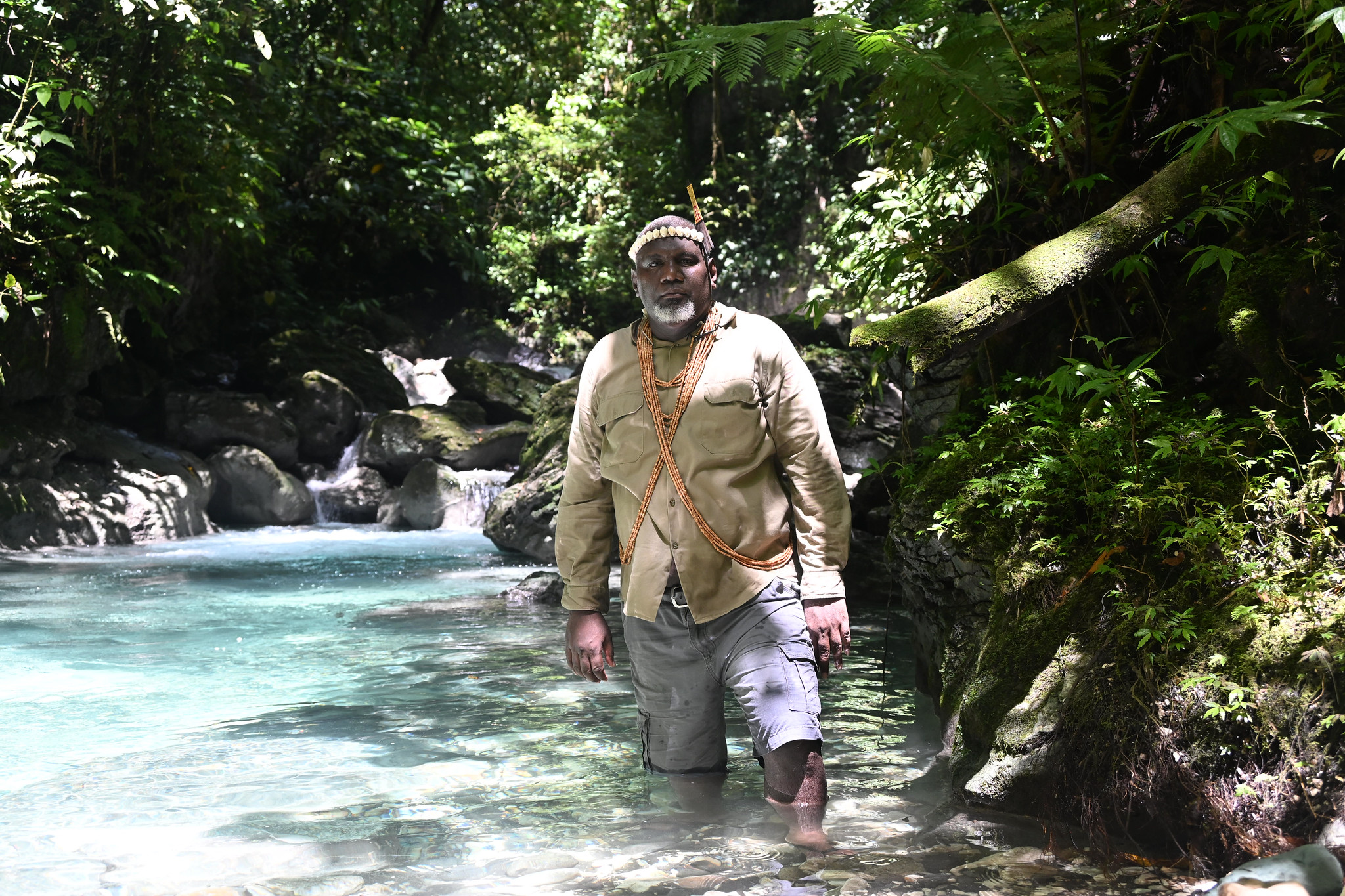
Sitting on a rock in the middle of an unspoiled stream, Andrew Taraha scoops a handful of crystal-clear water and warns, as it drips from his fingers:
“Some will not be able to see this in the future.”
Andrew is surrounded by lush rainforest, where beams of sunlight dapple the dense green canopy and light up the stream in striking shades of turquoise. The steady flow of a nearby waterfall underscores his words: “Generations that have not been born yet will not see this kind of clean, natural water. They will only see water that is not good, forest that is destroyed.”
Ancestral Lands Under Threat
Andrew’s warning echoes the fears of the entire Are`Are people, as relentless commercial logging and weak legal protections for their customary lands undermine their traditional livelihoods. For this Indigenous group in the Solomon Islands, whose ancestors settled the Are`Are region in the south of Malaita province some 6,000 years ago, land is not merely a resource, but a living entity intertwined with their cultural identity, spirituality, and way of life.
The stakes are high as this pristine corner of the world is a Small Island Developing State and global biodiversity hotspot, already grappling with rising sea levels and extreme weather driven by climate change. Here, losing forests means the collapse of the fragile ecosystem the Are`Are people rely upon, and an irreversible blow to our planet’s natural heritage.
“The land is our life. To give it away for people to destroy is hurtful to us.”
— Jesse Auri’i, Kira tribe chief