


 The 24th session of the United Nations Permanent Forum on Indigenous Issues (UNPFII) was held from 21 April to 2 May 2025at the UN Secretariat in New York. The theme of this year was "Implementing the United Nations Declaration on the Rights of Indigenous Peoples within United Nations Member States and the United Nations system, including identifying good practices and addressing challenges.”
Against this backdrop, United Nations Educational, Scientific and Cultural Organization (UNESCO) and United Nations Development Programme (UNDP) co-hosted a side event “Indigenous Peoples and the Water Action Decade” on 28 April 2025. The event brought together Member States, Indigenous leaders, and other United Nations (UN) entities to spotlight the vital role of Indigenous Peoples (IPs) in freshwater governance.
For many Indigenous communities, water represents not only an essential resource but a sacred element. In its 2025 report on the “Indigenous Experience of Water in Africa,” the Indigenous Peoples of Africa Coordinating Committee (IPACC) emphasized that:
“The sacred view of water comes from the belief that water is a gift from the supreme being ‘Kyani’. According to Khwe belief, Kyani gave water to their great grandfathers as a blessing. In turn, the great-grandfathers established rules to honour this gift, ensuring its protection for future generations". This worldview reinforces the urgency of integrating Indigenous perspectives into global water governance.
H.E. Leonor Zalabata Torres, Colombia’s Ambassador to the UN and an Indigenous leader, delivered the opening remarks. She emphasized the sacred relationship between Indigenous Peoples and water, the vital role Indigenous women play in water governance, and the importance of preserving Indigenous knowledge systems. She also highlighted how Indigenous and Afro-descendant communities steward the preservation of natural resources through their knowledge and values—a key focus of the 16th Conference of the Parties to the Convention on Biological Diversity (CBD COP 16)held in Cali, Colombia in 2024.
In his speech, Mr. Nigel Crawhall (UNESCO) emphasized that the CBD have requested UNESCO to collaborate with IPs and partners to deliver a Joint Programme on the interconnection between cultural and biological diversity. UNESCO underscores the importance of Indigenous knowledge, languages, and intangible heritage in sustaining freshwater systems, especially amid climate instability.
The event also highlighted UNESCO’s broader initiatives, such as the Water Action Decade, the International Decade of Indigenous Languages, and the 2025 International Year of Glaciers' Preservation (IYGP), ensuring Indigenous voices are represented in water-related forums. Also, UNESCO’s Local and Indigenous Knowledge Systems (LINKS) programme, further supports Indigenous-led case studies and policy guidance on freshwater management.
Together with UNDP, UNESCO is working closely with other agencies and governments to ensure consistent participation of IPs, particularly from the Global South, to engage at key UN and multilateral water platforms within the framework of the UN Water Action Decade for Sustainable Development (2018-2028). Dr. Tania Martínez-Cruz, the Global Environment Facility’s Indigenous Peoples focal point, facilitated the dialogue, which included contributions from governments, regional IPs networks in Africa, Asia, and the Americas, and key UN entities, UN-Water, UN Framework Convention on Climate Change (UNFCCC) and the UN Convention to Combat Desertification (UNCCD). Together, they reaffirmed the vital role of IPs in safeguarding freshwater systems through centuries-old wisdom and community-led action.
Key Themes and Speakers Highlight
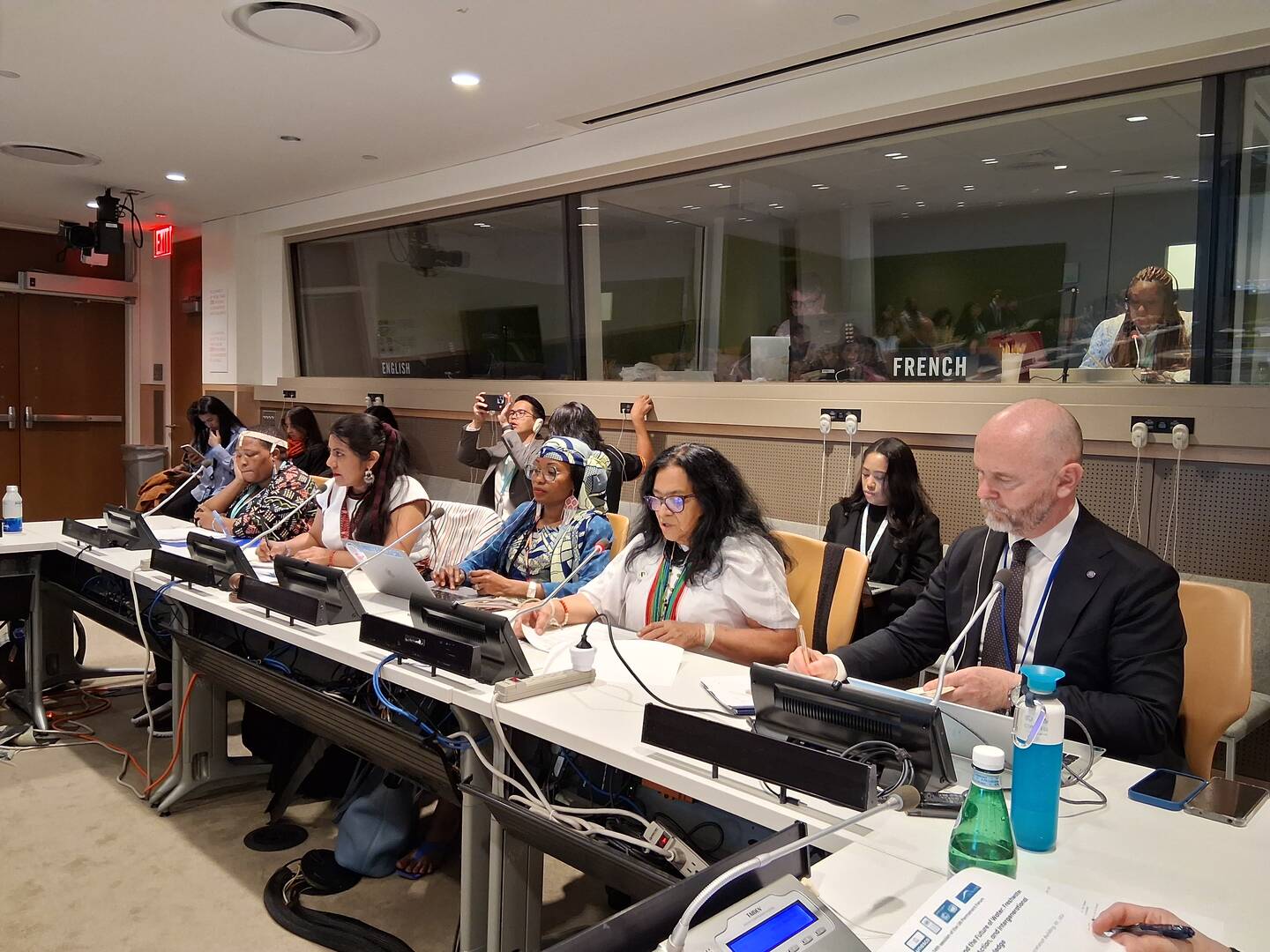
Speakers highlighted the breakthrough that was achieved with the Dushanbe Declaration in 2022 as well as the outcome of the UN 2023 Water Conference. This year’s UNPFII side event helped review key themes on how to enhance IPs participation in the UN Water Action Decade and preparations for the 2026 UN Water Conference, which will take place in Abu Dhabi, United Arab Emirates from 2-4 December 2026. Ms. Ana Paula Lavalle Arroyo from Mexico’s Permanent Mission discussed the country’s constitutional recognition of Indigenous rights and the integration of Free Prior and Informed Consent (FPIC) in water planning. Mexico, with 20% of its population identifying as Indigenous, offers diverse water governance models.
Mr. Gam Shimray from the Asia Indigenous Peoples Pact (AIPP) highlighted water’s central role in food systems and sustainability. He noted that AIPP promotes structured collective governance and collaborates with governments to strengthen water policy frameworks.
Ms. Onkemetse ‘Bhibo’ Maruping-Kgari, representing the San Family Support Centre and the IPACC, shared insights from Indigenous-led research on freshwater management in Africa, and the impacts of climate change and extractive industries. She called for full Indigenous participation and partnerships grounded in human rights.
Ms. Mona Polacca, a Hopi, Havasuai, and Tewa elder, representing the Indigenous Environmental Network, spoke about water’s spiritual and economic significance in Indigenous cosmovision. She emphasized its vital role in health, spirituality, and holistic worldviews.
Notable speakers from UN entities, including Ms. Hindou Oumarou Ibrahim (UNPFII), emphasized water’s role in fostering social cohesion and peacebuilding, especially among Africa’s nomadic communities. She highlighted the lack of a central UN convention on water and advocated for a rights-based, multilateral approach to water governance.
Mr. Terence Hay-Edie (UNDP) presented various initiatives involving IPs in freshwater conservation. UNDP has been a leader in promoting Indigenous roles in nature conservation, including Payment for Ecosystem Services (PES) initiatives that reward communities for activities like reducing deforestation and protecting water catchments. He emphasized that IPs offer much more through their long-term stewardship, ecological observation, and governance expertise.
Mr. Marcos Monteiro (UNCCD) highlighted the strong connection between water sustainability, ecosystem protection, and soil health. He noted that UNCCD COP16 in Saudi Arabia saw the largest-ever IPs participation, with Parties affirming the importance of Indigenous knowledge, rights, and involvement.
Ms. Donna Lagdameo (UNFCCC) emphasized the growing importance of water in climate action, noting the COP29 Declaration on Water for Climate Action and the Baku Dialogue was a significant progress.
Ms. Naiara Garcia Da Costa Chaves (UN-Water), confirmed that the UAE and Senegal will co-host the 2026 UN Water Conference. She emphasized the importance of stakeholder consultations and lessons learned from the 2023 conference to ensure inclusive participation.
The event reaffirmed that integrating Indigenous knowledge systems with scientific approaches is essential for water-secure and sustainable future, aligning with UNESCO’s 9th Intergovernmental Hydrological Programme and the Kunming-Montreal Global Biodiversity Framework.
Looking ahead, 2026 will mark both the International Year of Rangelands and Pastoralists (IYRP) and UNCCD COP17 in Mongolia, offering a key opportunity to align efforts on desertification, sustainable pastoralism, and freshwater governance.