




The North East India region – spanning the states of Arunachal Pradesh, Assam, Manipur, Meghalaya, Mizoram, Nagaland, Tripura and Sikkim - is a renowned biodiversity hotspot. The region contains more than 30% of the country’s total biodiversity, with an exceptionally high level of endemism across both flora and fauna. The area is a genetic treasure chest of rare plants, animals and microorganisms, including many threatened and endangered species. The region harbours 50% of India's flowering plants (31.58% of which are endemic), over 57% of India's orchids, and 42% of India's 150 bamboo species.
Concomitantly, the region also boasts a rich bio-cultural diversity, being the home to around 220 ethnic communities whose culture and traditions reflect their harmonious relationship with nature. Local governance since the 1900s has ensured the preservation of tribal identities, cultures, and traditional practices. As such, traditional knowledge and local expertise play a significant role in biodiversity conservation and adaptation to climate change impacts.
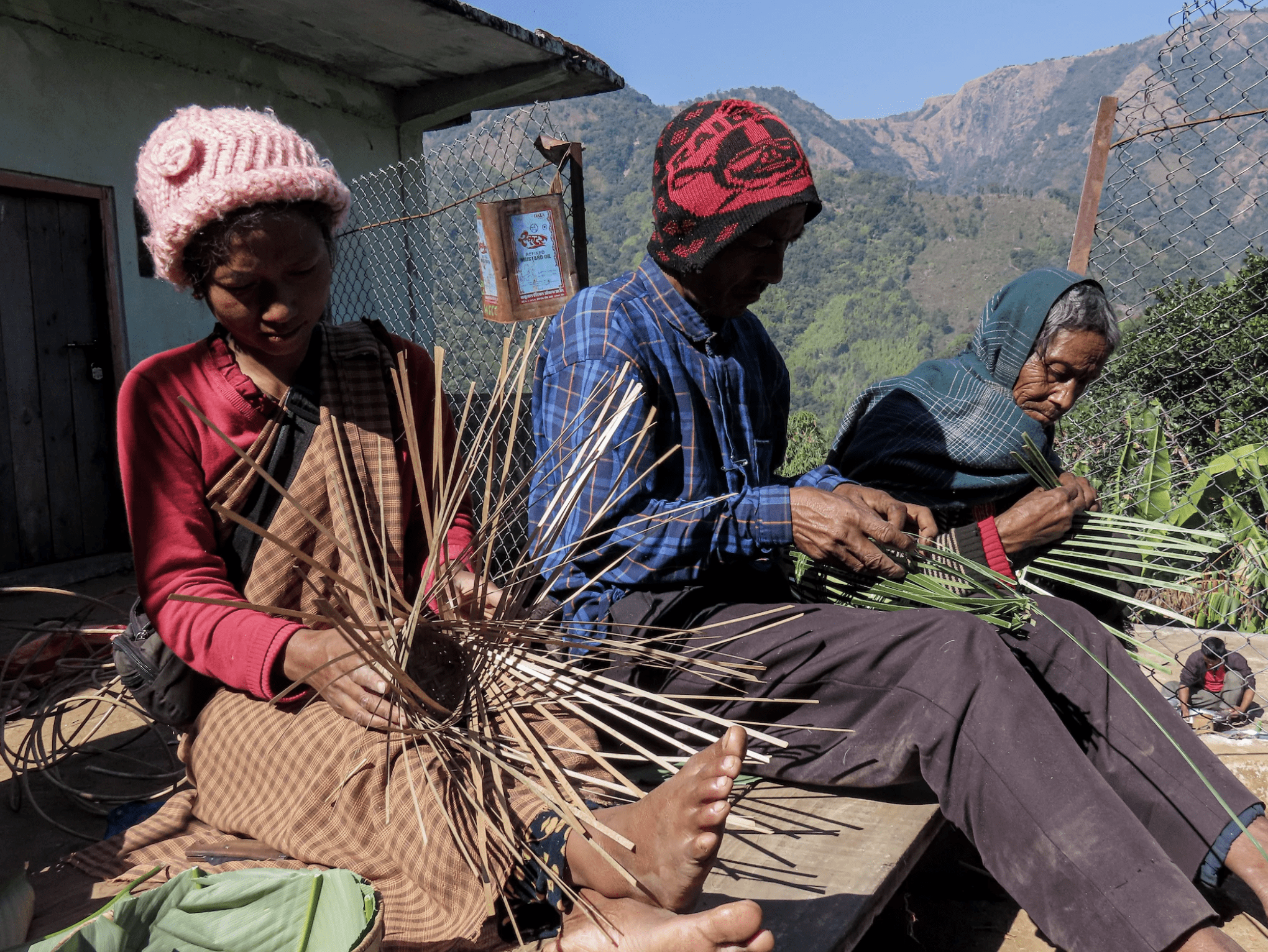
On site demonstration by community of Maw-ah village on bamboo craft, East Khasi Hills district, Meghalaya. Photo: ©Kaushik Agarwala
A Myriad of Threats, A Coordinated Response
Over the last decade, the North East India region has experienced unprecedented extreme weather events, both in terms of frequency and intensity. These climate change impacts threaten the livelihoods of Indigenous Peoples and ethnic communities, and reciprocally exacerbate vulnerabilities that stem from poverty, lack of access to government services and education, and limited crop insurance. In turn, increased urbanization in search of employment, abandonment of traditional agricultural practices, and lack of inter-generational knowledge transfer are now prevalent for these communities who were previously self-sufficient. Bio-cultural heritage erosion and environmental degradation are now key threats in the region.
Empowering Communities
Through the Global Support Initiative to territories and areas conserved by Indigenous Peoples and local communities (ICCA-GSI), the Global Environment Facility (GEF) Small Grants Programme (SGP) - which is implemented by UNDP - started the North-East India Biocultural Initiative (NEBI) to empower and build the capacity of vulnerable Indigenous and ethnic communities in revitalizing traditional knowledge and promoting ecosystem-based solutions that complement their ecological and cultural systems.